D I S C O V E R Y S E R V I C E S
Deep Science for Early Innovation
Discovery Biology & Biotherapeutics
Following a year of focused execution, Discovery Biology & Biotherapeutics expanded how it supports customers working on complex and emerging modalities, while continuing to sharpen speed, data integrity and delivery consistency.
A dedicated high-potency capability for antibody–payload conjugation was commissioned to support early-stage ADC programs, expanding capacity several-fold. We also added advanced mass spectrometry within the DMPK ecosystem to better serve advanced therapeutic modalities, including conjugated modalities and oligonucleotide-based approaches.
On the science platform side, cell-based capabilities were strengthened to enable transporter-focused characterization of small molecules, and a transporter assay platform was introduced within DMPK. Initial steps were also taken toward developing organoid models in oncology, creating a foundation for expanding non-animal study approaches over time.
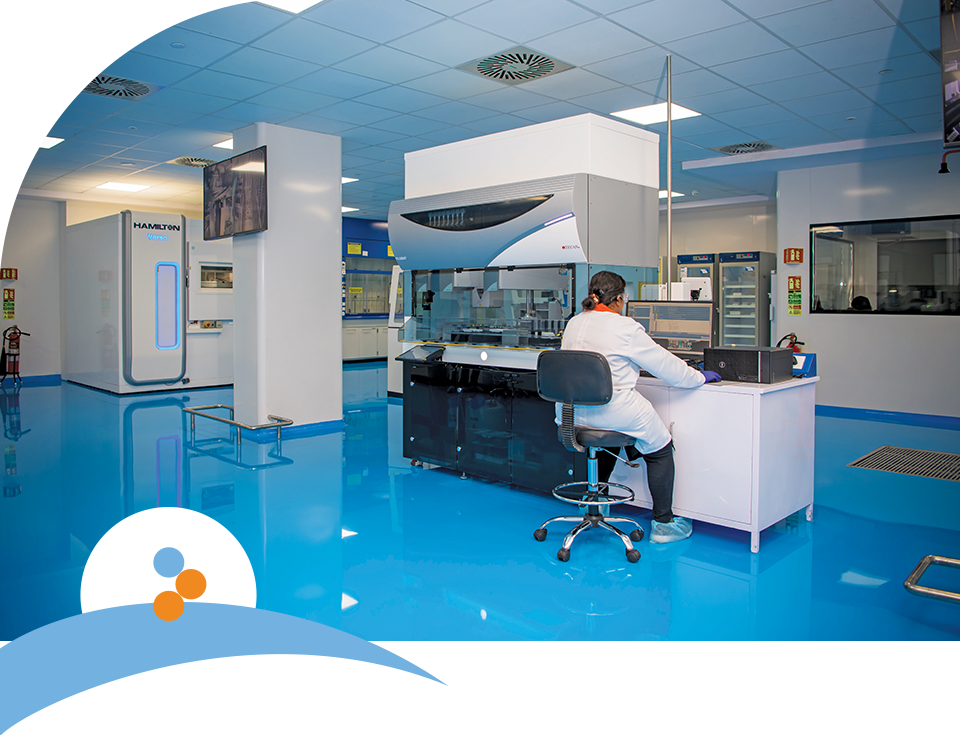
Digitization remained a practical enabler across the operating workflow. We advanced automation within compound management and integrated AI-based solutions to streamline workflows. In parallel, AI-enabled molecular design capabilities were enhanced to improve developability assessments and reduce liabilities, supporting faster iteration cycles for customers.
Across operations, productivity was improved through phased automation and targeted equipment upgrades, while strengthening the capabilities needed to support programs that move from discovery into development with greater continuity.
Safety Assessment
Safety Assessment continued to strengthen its support across small molecules, biologics, vaccines and emerging modalities. The platform supported repeat-dose and genetic toxicology programs, complex routes of administration, IND-enabling packages and regulatory submissions, helping customers make informed decisions earlier in the development pathway.
We expanded capabilities across juvenile toxicity, genetic toxicology, pathology and bioanalysis. Specialized behavioral assays were validated for juvenile toxicity studies, while mutation and DNA-damage assays, including Comet assay capability, strengthened support for evolving regulatory requirements, including nitrosamine-related evaluations.
Digital enablement further improved scientific review and workflow discipline. A digital pathology system was implemented for whole-slide scanning, evaluation and peer review, enabling faster review cycles and reducing reliance on physical slide movement. This capability positions Syngene among the first CROs in India to offer this service. Barcode-based sample identification was also initiated to improve accuracy, traceability and study discipline.
The team also continued to support internal development and manufacturing teams through toxicology inputs for safe handling, cleaning validation and exposure limit setting, while maintaining a clear focus on scientific rigor, regulatory-readiness and predictable delivery.